SimR: Simulation in Robotics
ICRA 2026 Tutorial
| Participants | Little to no prior experience with simulation |
| Description | Introduction to simulation in robotics |
| Where | Stolz 1 @ ICRA |
| When | Mon Jun 1, Morning Session |
| Supplies | You will only need a laptop1 |

What simulator should I use? is a common question among robotics researchers and practitioners when starting a new project or exploring a new domain (we now rarely ask “Should I use a simulator?”).
We’ll use this shared Google Sheet for questions and discussion during the tutorial. Feel free to add questions, comments, or resources related to simulation in robotics research.
This is a particularly challenging question for newcomers to our field. The rise of data-driven methods in robotics has led to surge in simulator development, supported by research labs, industry, and open-source communities. These systems vary widely in their capabilities, strengths, and pain-points. Even with recent advances in simulation and training materials, finding the right level of abstraction for a given problem remains a mixture of art and science. Moreover, finding the right simulator must necessarily consider the post-simulation goals; how will any simulation results transfer to the real world?
In this tutorial, we will survey modern simulation techniques and tools for robotics research. We will then train a simple reinforcement learning agent in simulation. SimR is a tutorial on the fundamentals of simulation for robotics research.
This is the third occurrence of SimR.
- The first was held as a workshop at GECCO 2017.
- The second as a tutorial at ALIFE 2024.
Schedule
The tutorial is organized around a practical simulation workflow for robotics research. We will move from basic setup and terminology to hands-on simulation, visualization, model building, and optimization.
If you’d like to follow along with the tutorial, you can find the materials in the LWMR repository. You can also read through the basics (in the navigation bar) prior to the tutorial start.
| Part | Topic | Description |
|---|---|---|
| 1 | Welcome and introductions | Introduce the organizers, tutorial goals, and expected background. |
| 2 | Tooling and environment setup | Introduce the software stack used in the tutorial. |
| 3 | Simple simulation demos | Work through small examples such as a spinning cube. |
| 4 | More complex robot demos | Explore larger examples such as wheeled robots. |
| 5 | Builder API for custom models | Show how to use the builder API to create a custom robot and scene. |
| 6 | Scaling experiments | Show how to scale simulation experiments using SLURM. |
| 7 | Wrap-up and open discussion | Summarize key takeaways and answer remaining questions. |
Organizers
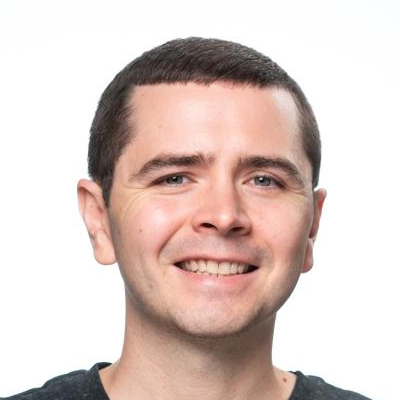
Anthony J. Clark
Anthony J. Clark received his Ph.D. from Michigan State University. He is currently an Assistant Professor in the Computer Science Department at Pomona College in Claremont, California, USA. His research interests include autonomous robotics, control theory, adaptive control, and evolutionary optimization.

Jared M. Moore
Jared M. Moore received his Ph.D. from Michigan State University. He is currently an Associate Professor and Associate Dean in the College of Computing at Grand Valley State University, Allendale, Michigan, USA. His research interests include adaptive software, autonomous robotics, and evolutionary optimization.

Neil Chulani
Neil Chulani received his bachelor’s degree in Computer Science from Pomona College in Claremont, California, USA. He is currently a CoreOS Engineer at Apple.
Footnotes
It would be great to have access to a machine with CUDA support.↩︎